

How Interest Rates Move Stocks, Bonds and Crypto — the One Mechanism Behind Almost Every Market Move

One number, three markets
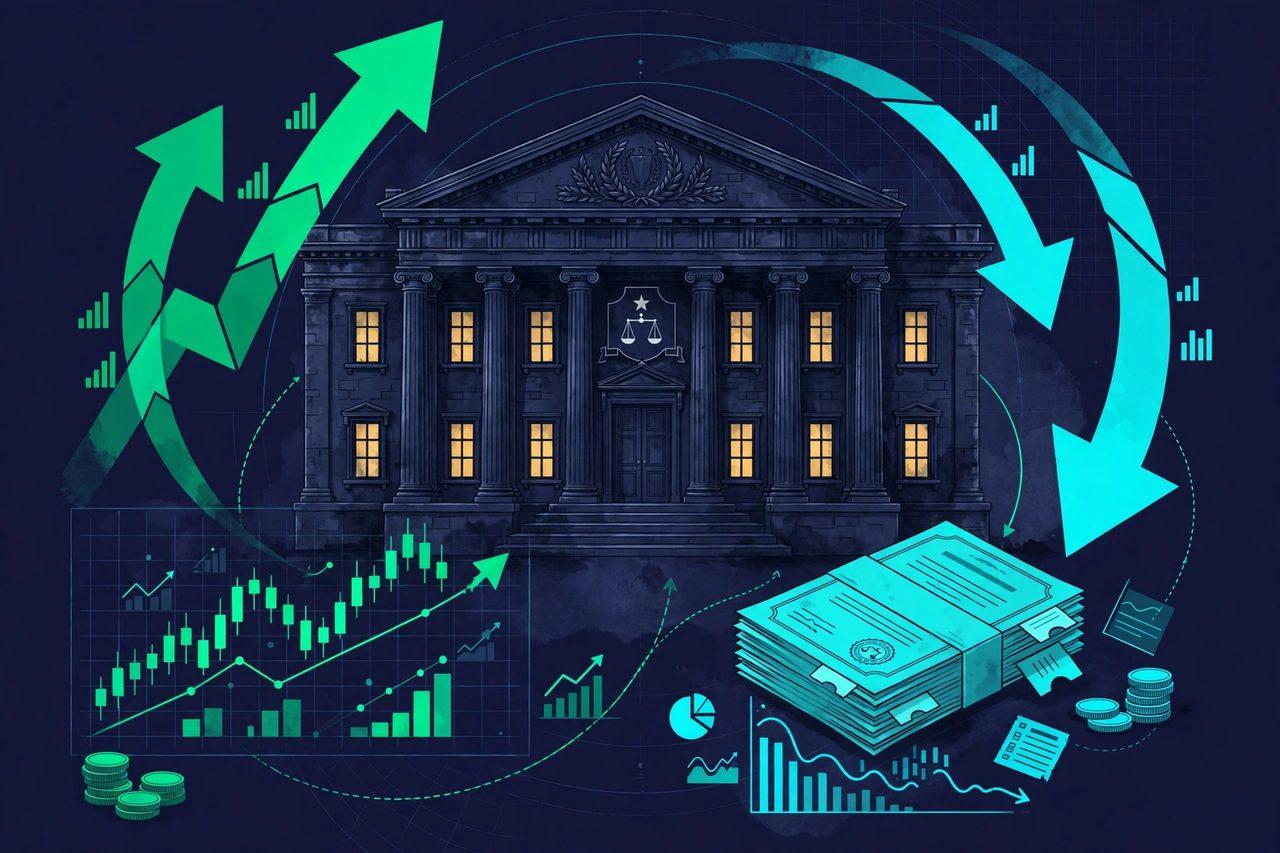
Ask why stocks fell on a Tuesday and the answer is often a single mechanism: interest rates moved, or the market changed its mind about where they are going. Interest rates are the price of money over time — what it costs to borrow, and what you earn for lending. When that price changes, it reprices almost everything, because almost every asset is valued by comparing its future cash flows with what you could earn safely instead. A stock is a claim on future profits. A bond is a stream of fixed payments. Crypto has no cash flow at all, which is why it often moves the most violently on rate news: with no yield of its own, its appeal rises and falls almost entirely with what else is on offer and how much risk investors want to take. Understand rates, and most market headlines start to read like variations on one theme.

The chain reaction, step by step
Start with the central bank. When a central bank raises its policy rate, borrowing gets more expensive across the economy: mortgages, business loans, credit cards and margin all cost more. Companies earn less after interest costs, consumers spend less, and growth slows — which is usually the point when inflation is running hot. When it cuts, the reverse happens: borrowing gets cheaper, spending and investment get easier, and growth gets support. But markets rarely wait for the actual decision. They trade on expectations, built from inflation reports, jobs data and central bankers' speeches — which is why a single inflation print or jobs report can move markets more than the rate decision itself. The market's rate path is priced into bond yields every day: if traders expect higher rates for longer, yields rise; if they expect cuts, yields fall. That is also why stocks can fall on "good" economic news — strong jobs data can mean fewer cuts, higher yields, and a higher bar for every other asset.
Why bonds fall when rates rise
Bonds make the mechanism visible. A bond pays a fixed coupon, so when new bonds pay more, old bonds paying less are worth less — their price falls until their yield matches the new rate. That inverse relationship is the single most useful fact in bond investing: rates up, bond prices down; rates down, bond prices up. It also explains why bondholders watch the yield curve — the line joining yields on short- and long-term government bonds. Normally, longer-term bonds pay more, because lending for longer carries more risk. When short-term yields rise above long-term ones, the curve "inverts," and markets read it as a warning that tight policy may slow growth. For stocks, the channel is valuation: analysts value future profits by discounting them at a rate tied to bond yields, so higher yields shrink the present value of distant profits — which hits fast-growing, high-valuation companies hardest, because more of their value sits in the far future. For crypto, the channel is liquidity and risk appetite: higher yields make safe cash more attractive, raise the cost of leveraged trading, and pull money toward assets that pay something, while lower yields push investors back out the risk curve toward assets like Bitcoin and high-growth stocks.
• Policy rate: the central bank's benchmark rate, which sets the floor for borrowing costs across the economy
• Bond yield: the return a bond pays at its current price; yields rise when bond prices fall, and vice versa
• Discounting: valuing future profits by shrinking them at today's interest rate — higher rates mean lower present values
• Real rate: the interest rate after inflation; what matters for savers is what their money earns after prices rise
• Yield curve: yields across maturities; an inverted curve (short rates above long rates) is read as a growth warning
• Risk appetite: how much risk investors will take for a given return — it rises when safe yields are low, and falls when they are high
How to read a rate decision like a trader
When a rate decision lands, read it in this order. One, the decision itself — hike, hold or cut — against what markets expected, not against zero. Two, the statement and press conference language: words like "persistent," "patient" or "data-dependent" move markets because they change the expected path, not just today's rate. Three, the bond market's reaction: if yields rise after a cut, the market is saying the cut was already priced in, or that it fears inflation more than it welcomes easing. Four, the dollar: higher expected United States rates usually support the dollar, which in turn pressures commodities priced in dollars and emerging-market assets. Five, your own position: rate moves change the cost of leverage, so a leveraged trade that was comfortable at one rate can become expensive at another — check margin costs before adding size. The beginner's mistake is trading the headline. The professional's habit is trading the change in expectations — and remembering that the market's first move after a decision is often reversed once the statement is fully read.

FAQ
What is an interest rate, in one sentence? The price of borrowing money over time — what borrowers pay and lenders earn.
Why do stocks fall when rates rise? Higher rates raise borrowing costs, cut future profits, and raise the discount rate used to value those profits — so the present value of a stock falls, especially for fast-growing companies.
Why do bond prices fall when rates rise? A bond's payments are fixed, so when new bonds pay more, old bonds must fall in price until their yield matches.
Why does crypto move so much on rate news? Crypto pays no yield, so its appeal depends heavily on what safe assets pay and on overall risk appetite — both of which rates drive.
What is the yield curve, and why does inversion matter? It plots yields across maturities; when short-term yields exceed long-term ones, markets read it as a sign tight policy may slow growth.
Should beginners trade around rate decisions? Usually not at full size — the first move is often the noisiest, and expectations, not the headline decision, are what actually move prices.
Read more on Zimbuck: https://zimbuck.com/pages/zimbucknews and join the discussion at https://zimbuck.com/groups/zimbuckmarketnews . Related reading on the site: How to Read a CPI Inflation Report: Headline vs Core, Month vs Year, and What Actually Moves Markets, https://zimbuck.com/blogs/792/How-to-Read-a-CPI-Inflation-Report-Headline-vs-Core and Futures Rebound as Wall Street Faces Its Biggest Week: Midterms, Jobs and Earnings, https://zimbuck.com/blogs/832/Futures-Rebound-as-Wall-Street-Faces-Its-Biggest-Week-Midterms . Join Zimbuck at https://zimbuck.com to follow more economic coverage.
This article is general educational information only, not financial advice.




