

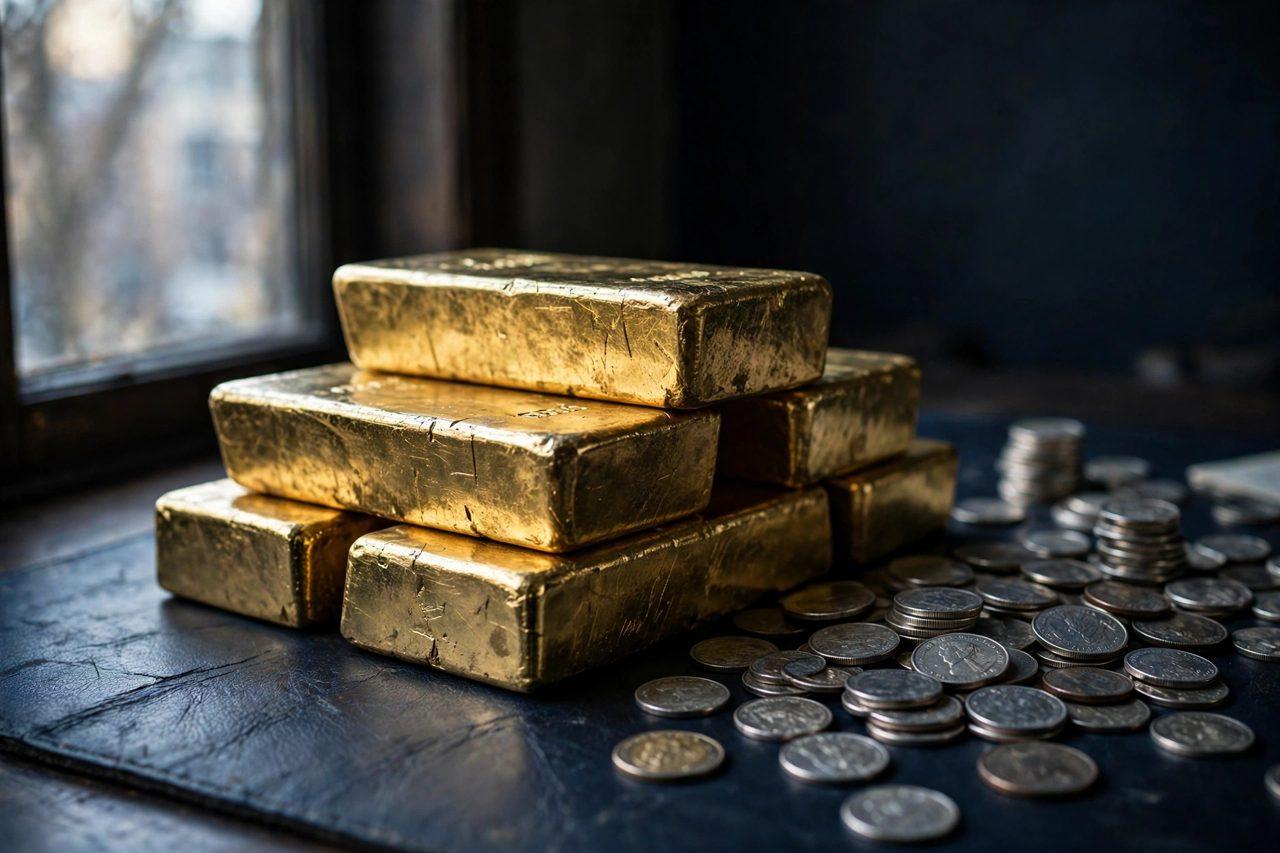
Gold Falls 4.6% to $3,884 in Worst Weekly Run Since 1989 as Silver and Copper Slide Too

Gold has just posted its worst weekly run in decades. Bullion fell 4.56% this week to $3,883.94 an ounce, touching $3,852 — its lowest level since October 2025 — in what analysts describe as a tenth weekly loss in twelve weeks and the worst losing streak since 1989.
The driver is not a gold-specific problem. Hot US inflation data has pushed markets to price a 91.4% chance of a 25-basis-point Federal Reserve rate hike in December, lifted the dollar to a 19-month high and sent Treasury yields above 5%. Thursday's break below $3,900 had already marked a one-year low — see our earlier report on gold's slide and the oil surge. Precious metals, which pay no yield, are the first casualty when cash itself starts paying more. Follow the metals desk via Zimbuck News as the week develops.
The week's damage, metal by metal
- Gold: $3,883.94, down 4.56% on the week; intraday low $3,852
- Silver: $48.70, down 6.18% on the week
- Copper (COMEX): $6.0635 a pound, down 2.79% — a four-month low and a fifth straight weekly fall
- Platinum: around $1,490, down on the week
- WTI crude: $88.92, down 2.10% — a second weekly loss as surplus fears outweighed supply headlines
- Natural gas: up 8.1% to $3.242 on cold weather and record LNG flows — the week's standout gainer
The full commodity week-ahead breakdown is here.
Why a stronger dollar hits everything at once
Gold, silver, copper and oil are all priced in dollars worldwide. When the dollar rises to a 19-month high, every one of those commodities instantly becomes more expensive for buyers holding euros, yen or rupees — and demand softens at the margin. Add a 10-year Treasury yield in the 5.1% area, and the opportunity cost of holding a non-yielding metal rises again. That double squeeze is why this week's falls were broad rather than isolated to one contract. The macro side of the story is debated daily in the Zimbuck Market News group.
Silver and copper tell the growth half of the story
Silver's steeper fall — more than 6% against gold's 4.56% — fits its dual personality: half precious metal, half industrial input. When rate fears rise, silver loses the precious-metal bid; when growth worries follow, it loses the industrial one too. Copper's fifth straight weekly decline, its longest losing streak in two years, points the same way. The red metal is treated as a proxy for global construction and manufacturing demand, and a four-month low says traders are pricing a cooler world economy alongside higher US rates.
The levels traders are watching now
Technicians point to $3,852 — this week's low and the 2026 low — as the line gold must hold, with $4,000 the level bulls need to reclaim before the trend talk changes. Copper's channel floor near $6.05 and WTI's trendline near $84 are the other two exposed levels. Next week's calendar is heavy: Fed speakers on Monday, US retail sales on Tuesday and the FOMC minutes on Wednesday.
FAQ
Why did gold fall if inflation is high? Because markets now expect the Fed to respond with higher rates. Higher yields and a stronger dollar usually outweigh gold's inflation-hedge appeal in the short run.
How bad is this run historically? A tenth weekly loss in twelve weeks is gold's worst sequence since 1989, and price is roughly 27% below its January 2026 peak.
Why did natural gas rise while oil fell? Gas trades on weather and local supply — cold forecasts and record LNG exports tightened it — while oil is weighed down by surplus forecasts.
What could turn metals around? Softer US data that unwinds December hike pricing, or a dollar pullback, would relieve both sides of the squeeze.
Commodities are moving as one macro trade right now, and the dollar is the steering wheel. Track the discussion and the next data releases with the community at Zimbuck. This article is market news and general information only, not financial advice.






