

Gold has a price that flashes on screens all day, yet almost nobody who trades it ever holds a bar in their hands. The number you see quoted — the spot price — is the product of an auction in London, a mountain of futures contracts in New York, and the value of the US dollar. This guide explains how gold is actually priced, why the price moves, and what the difference between spot and futures really means. It is a question the commodities desk returns to often in the Zimbuck News page at https://zimbuck.com/pages/zimbucknews, because gold's price is quoted in almost every market report.
What the spot price is
The spot price is the price for immediate delivery: what a buyer pays to own gold now, rather than at some date in the future. When headlines say “gold rose” or “gold fell”, they are almost always talking about the spot price, usually quoted in US dollars per troy ounce. It is a single global reference number, even though gold itself is bought and sold in dozens of currencies and markets around the world.
That single number hides a lot of plumbing. Gold does not trade on one exchange with one order book. It trades in several places at once, and the spot price is best understood as the consensus of those markets — the level at which buyers and sellers around the world are currently willing to transact.
The London benchmark
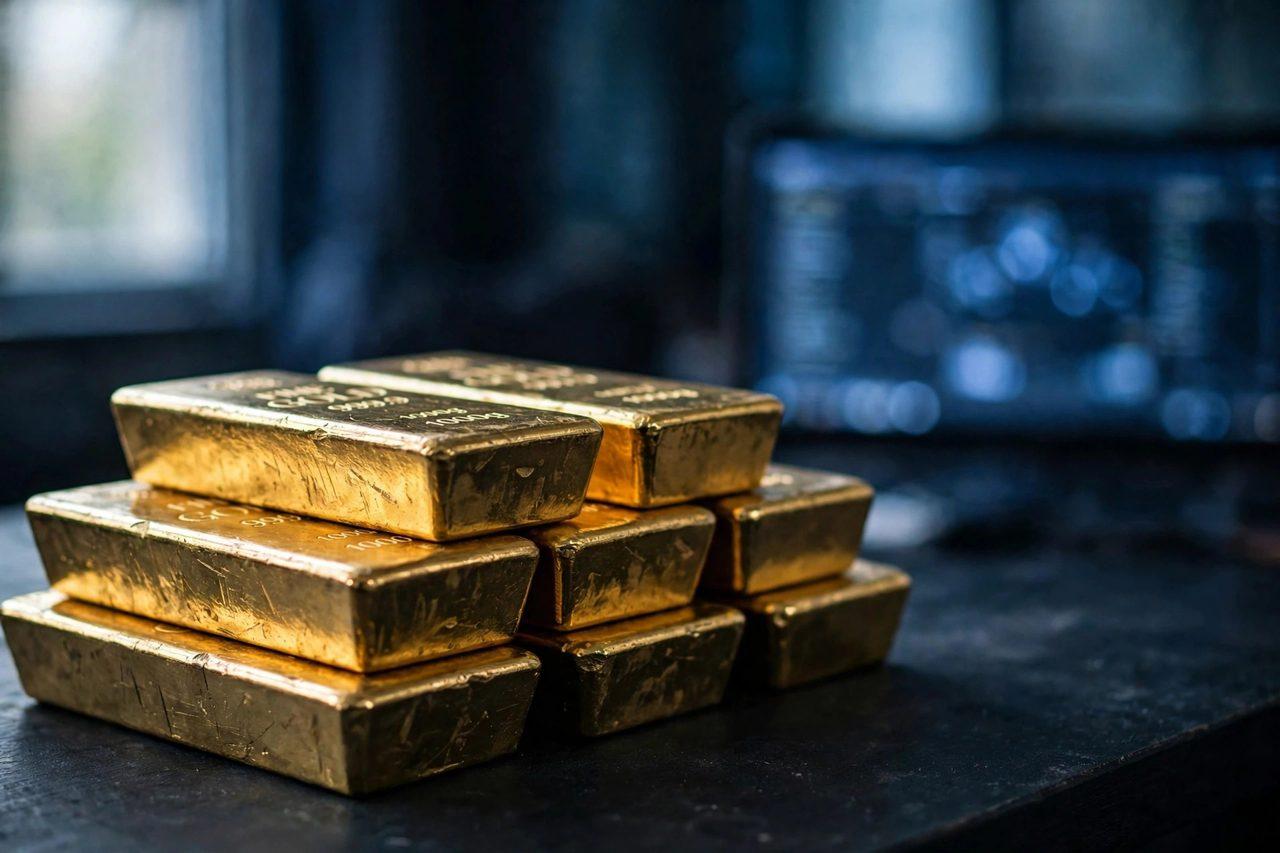
At the centre of that consensus sits London. The LBMA Gold Price is the benchmark used in contracts worldwide, and it is set by an electronic auction held twice each London business day — once in the morning and once in the afternoon. In the auction, participants submit buy and sell orders until the price balances them out, and the resulting price is published as the benchmark for that session.
The benchmark matters because so much of the gold world references it: producers, refiners, central banks and dealers use it to settle contracts, value holdings and price products. When you read that gold closed at a certain level, that level usually traces back to London.
Where most gold actually trades
For all the talk of physical bars, most gold trading never touches one. The bulk of volume runs through two channels: futures exchanges, above all COMEX in New York, and the over-the-counter market, where banks and dealers trade directly with each other in large sizes.
Futures are standardised contracts to buy or sell gold at a future date, and our guide to commodity futures at https://zimbuck.com/blogs/5981/What-Are-Commodity-Futures-How-Contracts-Expiry-and-Delivery-Work explains contracts, expiry and delivery in plain language. Almost no futures contract ends in a bar changing hands; positions are closed out or settled in cash before delivery. The over-the-counter market works similarly, with dealers quoting prices to each other and to large clients all day. Physical gold — bars and coins moving between vaults — is a small share of daily turnover, even though it is the thing the price ultimately refers to.
Why the dollar moves gold
Gold is priced in US dollars globally, and that single fact drives much of its day-to-day movement. When the dollar strengthens against other currencies, gold becomes more expensive for buyers who hold those currencies, which can weigh on demand. When the dollar weakens, the same gold costs less in other currencies, which can support buying.
The relationship is not a hard rule — gold can rise with the dollar when both are bought as havens — but it is the first explanation traders reach for when gold moves without an obvious gold-specific cause. Discussions in the Zimbuck Market News group at https://zimbuck.com/groups/zimbuckmarketnews often split along exactly this line: is gold moving because of gold, or because of the dollar?
Real yields and the opportunity cost
Gold pays no interest, no dividend and no coupon. That makes real yields — interest rates after inflation — one of its most important drivers. When real yields rise, holding gold carries a higher opportunity cost: an investor gives up more interest by owning a metal that pays nothing. When real yields fall, that cost shrinks, and gold becomes relatively more attractive.
This is why gold often moves in the opposite direction to bond yields, and why central bank decisions matter so much to the metal. A rate cut that lowers real yields can lift gold even when nothing has changed in the physical market; a hawkish surprise that lifts real yields can press it lower.
Who actually buys physical gold
Behind the paper markets, physical demand has a few large pillars. Jewellery is the largest single source of demand, led by buyers in Asia. Central banks buy gold to hold as reserves, and their buying has become a steady feature of the market in recent years. Industrial uses — electronics, dentistry and other applications — are smaller but steady.
These buyers do not set the price day to day — the futures and over-the-counter markets do that — but they set the floor underneath it. Strong physical demand absorbs supply and makes sharp falls harder to sustain; weak physical demand leaves the price more exposed to swings in paper-market sentiment.

Spot vs futures: why the two prices differ
The spot price and the futures price for a later month are rarely identical. The gap reflects the cost of carrying gold to that later date: storage, insurance and financing. A futures price for delivery in six months is typically a little above spot, because someone has to pay to hold the metal until then. If the gap widens or narrows, it tells traders something about storage costs, interest rates and how urgently buyers want gold now rather than later.
Frequently asked questions
What is the difference between the spot price and the price I pay for a coin?
The spot price is the wholesale market level. A coin or small bar sells at spot plus a premium that covers minting, distribution and the dealer's margin, so retail prices are always above spot.
Why does gold fall when the dollar rises?
Because gold is priced in dollars worldwide. A stronger dollar makes gold more expensive in other currencies, which can reduce demand outside the United States and press the dollar price lower.
Do central banks really move the gold price?
Their buying is large and steady, which supports the price over time, but day-to-day moves are driven far more by futures trading, the dollar and real yields than by any single central bank purchase.
Is the futures price a forecast of where gold is going?
Not exactly. A futures price mainly reflects the cost of carrying gold to the delivery month — storage, financing and interest — rather than a prediction. It can sit above spot even when nobody expects gold to rise.
The bottom line
Gold's price is not set by a single shop or exchange. It is a consensus built from a twice-daily London auction, the futures market in New York, over-the-counter dealing between banks, and the value of the dollar — all filtered through real yields and underpinned by physical demand from jewellery buyers and central banks. Once you know which of those forces is moving on a given day, the gold price in the headlines becomes far easier to read. Follow the commodities conversation and daily market coverage on Zimbuck at https://zimbuck.com.
This article is market news and general information only, not financial advice.