

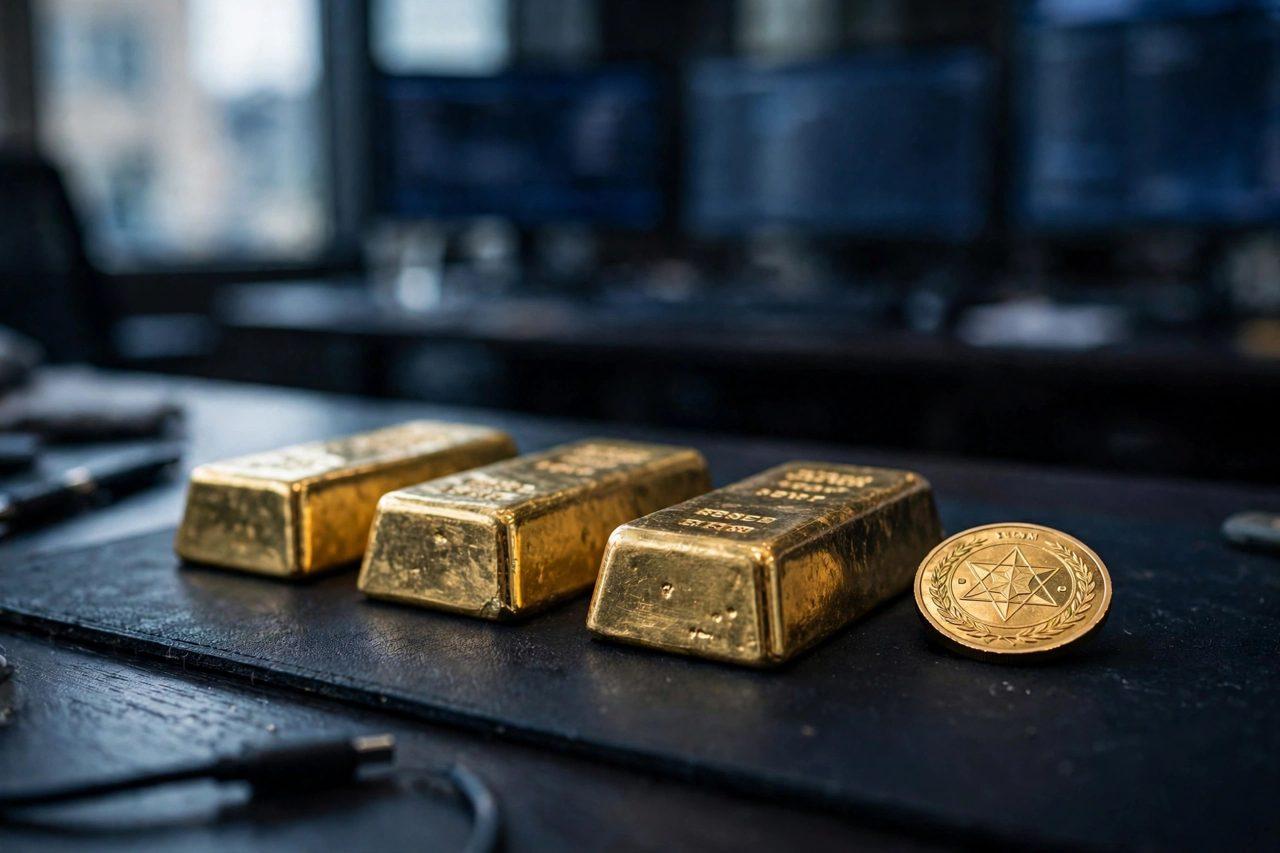
What Is Tokenised Gold? How Gold-Backed Crypto Tokens Work, Explained

Tokenised gold sounds like a contradiction — the oldest money in the world, wrapped in the newest technology in finance. Yet gold-backed crypto tokens have quietly become one of the most practical bridges between traditional assets and blockchain rails, and after gold's dramatic run and sharp pullback this month, more readers are asking how they actually work.
This guide explains, in plain language, what tokenised gold is, how the peg to real gold is maintained, where the metal actually sits, and the risks that matter before anyone treats a token like a bar in a vault.
What tokenised gold actually is
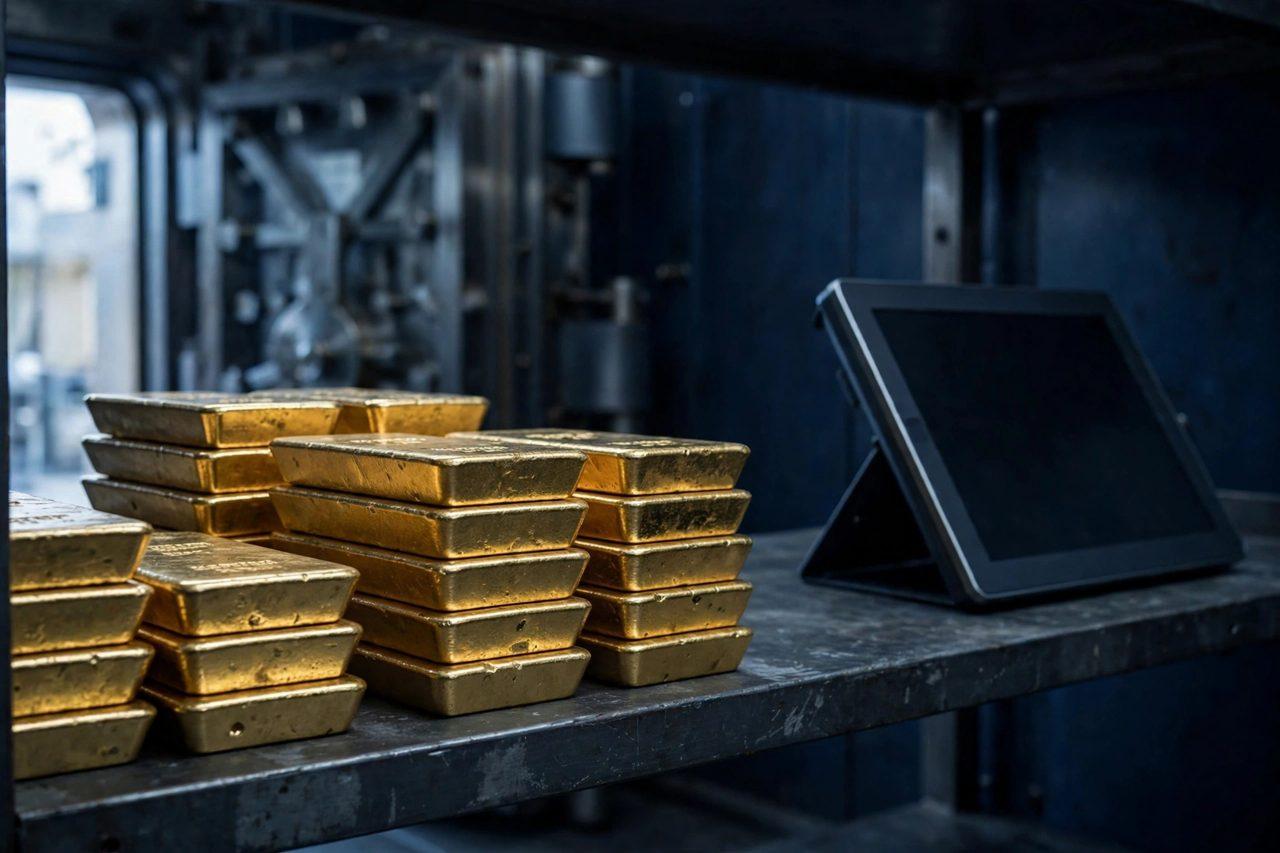
A gold-backed token is a crypto token issued against physical gold held in custody. In the standard model, each token represents a claim on a specific quantity of gold — commonly one troy ounce — held by a custodian in a professional vault. The token itself lives on a blockchain, so it can be transferred, traded or held in a wallet like any other crypto asset, while the metal stays in one place.
That split is the whole idea. Moving physical gold is slow, expensive and risky. Moving a token that represents gold takes seconds. The blockchain handles the transfer; the vault handles the storage.
How the peg is supposed to hold
The link between token and metal rests on three things:
- Reserves: the issuer holds gold equal to the tokens in circulation, ideally with published audits or attestations.
- Redemption: holders can, under the issuer's terms, redeem tokens for physical gold or its cash value — this arbitrage is what pulls the token price back toward the gold price when it drifts.
- Market trading: tokens trade on exchanges around the clock, so their price tracks spot gold closely, with small premiums or discounts that come and go with demand.
When redemption works and reserves are real, a token trading far below the value of its gold invites buyers to purchase it cheaply and redeem it — closing the gap. When confidence in the reserves cracks, that mechanism weakens, which is why the issuer matters as much as the token.
Why people use it
- Access: buying a fraction of an ounce is easier than buying and storing a full bar.
- Speed: tokens settle in minutes, including on weekends when bullion markets are closed.
- Portability: a wallet can hold gold exposure across borders without shipping metal.
- Composability: tokens can be used inside crypto platforms — as collateral or in trading pairs — in ways physical gold cannot.
The risks nobody should skip
Tokenised gold is not the same as owning allocated metal in your own name, and the differences are where the risk lives:
- Counterparty risk: you depend on the issuer and custodian actually holding the gold and honouring redemption.
- Redemption limits: minimum redemption sizes, fees, identity checks and delivery rules vary — read them before buying, not after.
- Regulatory risk: rules for tokenised assets are still being written in many countries, and a platform available today can be restricted tomorrow.
- Price risk remains: a token tracks gold, so when gold falls — as it did sharply this month, sliding toward $3,515 an ounce — the token falls with it. Tokenisation changes how you hold gold, not what gold does.
Tokenised gold vs a gold ETF vs physical gold
A gold ETF gives exchange-traded exposure through a brokerage account during market hours. Physical gold gives direct ownership with storage and insurance headaches. Tokenised gold sits between them: crypto-wallet access and 24/7 transferability, in exchange for issuer and platform risk that neither of the other two carries in the same way. None of the three is automatically "best" — they are different trade-offs for different holders.
Questions to ask before buying any gold token
Who issues it? Where is the gold vaulted, and who audits it? Can I redeem, at what minimum and cost? What happens to holders if the issuer fails? If a project cannot answer those clearly, that is the answer.
FAQ
Is tokenised gold a stablecoin?
It behaves like an asset-backed token whose value follows gold rather than a currency. It is stable relative to gold, not relative to the dollar.
Do I own the actual gold?
You own a token that represents a claim under the issuer's terms. That is different from holding allocated bars in your own name — read the terms carefully.
Can I take delivery of the metal?
Many issuers offer redemption, usually above a minimum amount and with fees and identity checks. The exact rules are issuer-specific.
Does tokenised gold pay yield?
The token itself normally does not. Any yield would come from a separate platform product, which adds its own risk.
Read more market explainers on the Zimbuck News page and discuss gold, crypto and everything in between in the Zimbuck Market News group. For a related read, see our recent Solana price analysis on Zimbuck.
This article is general information only, not financial advice. Join the conversation on Zimbuck at https://zimbuck.com — where traders and investors talk markets every day.




